
23 free working tools
The HSE Toolkit
Free HSE tools that actually work: the risk assessment that scores itself, the inspection that writes its own report, the permit with the live gas test, the incident report with the 5-Why, the noise calculator with the formula shown. No account, no software, nothing leaves your browser — and every tool prints as a signed, dated document.
Five categories
Pick your category
Risk assessments, inspections, planning and permits, reports and data, and the calculators — 23 tools in total, each one working in the browser.
 Category · 8 tools
Risk Assessments
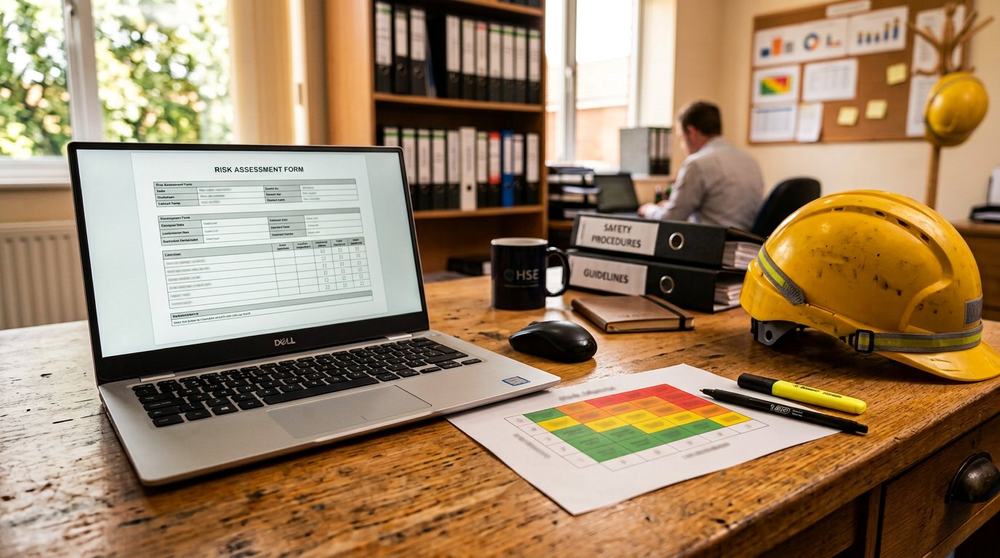
The 5-step assessment with the live matrix, the risk matrix calculator, the JSA builder, the fire risk assessment — 8 tools that score as you work.
 Category · 4 tools
Inspections & Checklists
The structured walk with the scored item and the callback: the workplace inspection, the electrical check with PAT, the PPE inspection, and the report that writes itself.
 Category · 5 tools
Planning & Permits
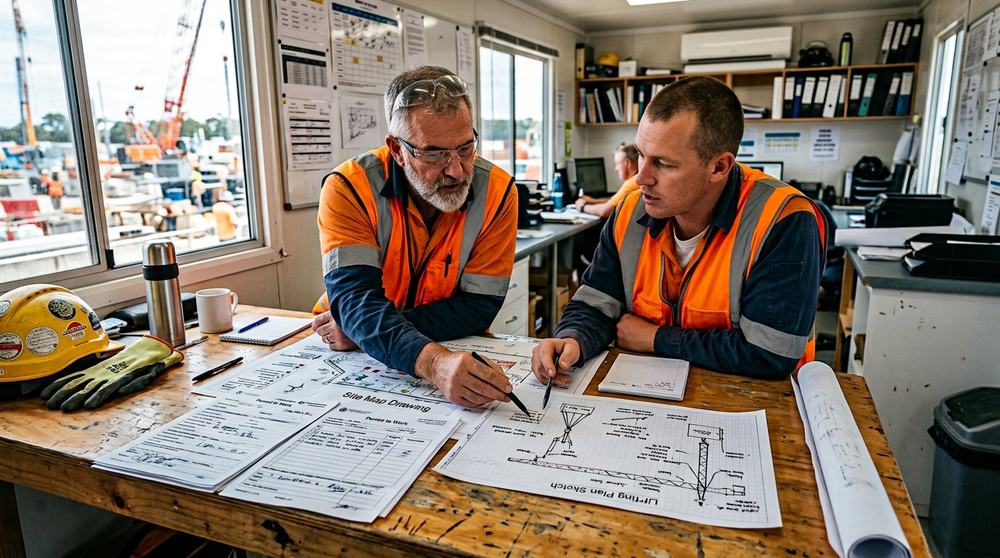
The high-risk work controlled before it starts: the lifting plan with the automatic classification, the permit with the live gas test, the method statement, the emergency plan.
 Category · 3 tools
Reports & Data
The feedback loop in tools: the incident report with the 5-Why and the RIDDOR check, the near-miss register with the trend, the safety KPI dashboard.
 Category · 3 tools
Calculators & Assessments
The hazards that are numbers: the noise TWA and dose, the manual handling with the NIOSH equation, the DSE check, the gas test against the limits.
Most used
Start with a top tool
Risk Matrix Calculator
Free HSE risk matrix calculator: enter likelihood and consequence, get the 5×5 score, the colour band and the
Risk AssessmentsJob Safety Analysis (JSA/JHA)
Free job safety analysis tool: break the job into steps, list the hazards, existing controls, add new controls
Risk AssessmentsGeneral Risk Assessment
Free 5-step general risk assessment tool: identify hazards, who is harmed, score the risk, select controls and
Calculators & AssessmentsNoise Exposure Estimator
Free noise exposure calculator: enter the levels and the times, get the 8-hour TWA, the OSHA dose, and the act
Reports & DataIncident Report
Free HSE incident report form: the facts, the first aid, the witnesses, the 5-Why root cause, the corrective a
Planning & PermitsPermit to Work (PTW)
Free permit to work forms: hot work, confined space, electrical, working at height and cold work
Risk AssessmentsFire Risk Assessment
Free fire risk assessment tool and template: the five key questions, hazard sources, people at risk, evaluatio
Reports & DataHSE Incident Data Analysis
Build the HSE incident report in Power BI: the data model, the KPIs (TRIR, LTIR, the severity, the near-miss r
How the toolkit works
1 · Open the tool. Every tool runs in your browser — nothing to install, nothing to upload. The client data stays yours: the tool is the instrument, not the database.
2 · Work it as you go. The scoring is live. The risk matrix lights the cell, the inspection writes the verdict, the gas test checks itself against the limits, the NIOSH equation shows the substitution. You see the number and the reason for it at the same time.
3 · Print it and file it. Every tool prints as a signed, dated document via the browser PDF. That is the record for the file, the client, the auditor and the investigation — the same document, whether it came from a laptop on the office floor or a phone at the site.
The tools are built to the UK baseline — the MHSWR, COSHH, LOLER, the Work at Height Regulations, RIDDOR, the DSE Regulations — with the US equivalents named on each page: the OSHA 1910.146 for the confined space, the NFPA 70E for the electrical, the NIOSH equation for the lifting. Where a document has legal force, the responsible person owns it — the tool is the preparation, the competent person is the sign-off.
Need the sign-off, not just the tool?
The tool is the preparation; the sign-off is the professional. For the statutory assessments, the audits, the ISO 45001 implementation and the training that comes with them, ask Muhammad Umer — 8+ years across Iraq, KSA and Pakistan, and the programme runs through umer-hse.pro. One message gets the written scope.
Common questions
The toolkit, answered
Are these HSE tools really free?
Yes — every tool on this branch is free, runs in your browser, and prints as a PDF. Nothing is uploaded, there is no account, and there is no trial version. The professional work (the audits, the assessments, the ISO 45001 implementation) runs through umer-hse.pro — the tools are the preparation, the professional is the sign-off.
Do the tools save my data?
No — everything you type stays in your browser for the session. When you are done, print or save as PDF, or export to CSV where the button is there. That is the design: the client data is the clients, and the tool is the instrument, not the database.
Which standards do the tools follow?
The UK baseline — the MHSWR, the COSHH Regulations, LOLER, the Work at Height Regulations, RIDDOR, the DSE Regulations — with the US equivalents named on each page (the OSHA 1910.146 for the confined space, the NFPA 70E for the electrical, the NIOSH equation for the lifting). Each tool page names the standard it implements.
Can I use these tools on my client site?
Yes — that is what they are for. Build the assessment or the report on your laptop, print it, and file it with the client. For the high-risk and the legal documents (the FRA for a complex premises, the process safety assessment), the tools are the preparation and the competent person is the sign-off — ask about the professional service on WhatsApp.
What is the difference between the tools and the courses?
The tools are for doing the work — the assessment, the inspection, the report, the calculation — today. The courses branch is for the credential and the career — the NEBOSH, the IOSH, the OSHA cards. Use the tools on the job; take the course for the line on the CV.
Safety disclaimer
These tools are practical guidance, built to the UK baseline with the US equivalents named on each page. They do not replace a competent person assessment for high-risk work, a statutory assessment, or the advice of your insurer. Where a document has legal force — the fire risk assessment, the COSHH register, the permit to work — the responsible person owns it. Use the tool as the preparation, and the competent person as the sign-off.