
Toolkit · 4 tools
Inspections & Checklists
The inspection is how the management system proves itself: the structured walk, the scored item, the finding, the owner, the callback. The tools here walk the site for you and write the report you file.
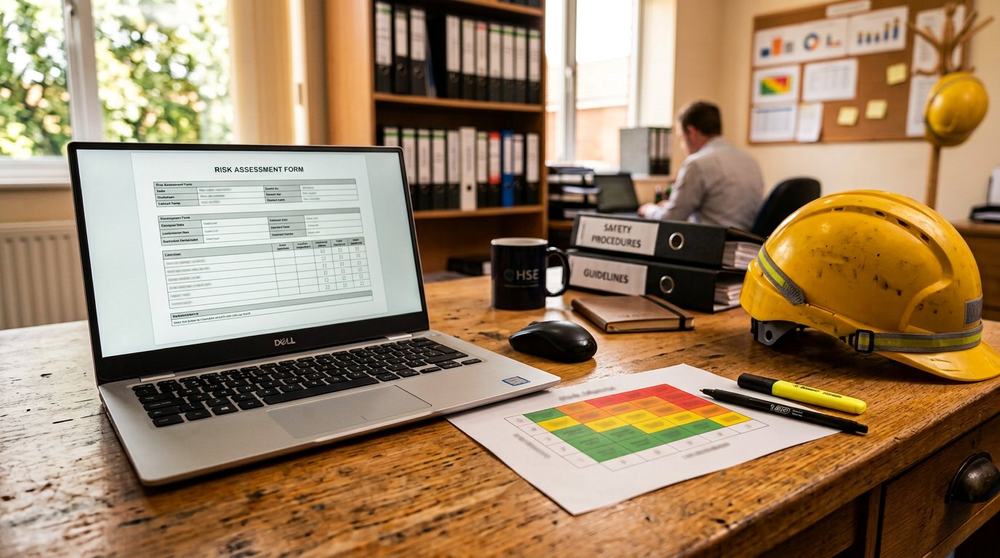
The inspection is how the management system proves itself: the structured walk, the scored item, the finding, the owner, the callback. This category is the four core inspection tools — the general workplace inspection, the electrical inspection with the PAT record, the PPE inspection with the service-life rules, and the occupational hygiene survey with the limits table — each one auto-scored and printing as a dated report with the action list.
The frequency is set by the risk, not the calendar: the construction site daily, the active process weekly, the stable office quarterly — plus the trigger inspections after any incident, any change, or any complaint. The workplace inspection is the walk that covers the whole area in one morning; the electrical inspection is the one with the test table, where the RCD and the continuity are recorded, not just looked at; the PPE inspection is the one that retires the harness that caught a fall; and the OH survey is the one that measures, where the agent is quiet — the silica, the noise, the fume. The callback is what makes it a system: every inspection opens with last times fails, and the next one closes them, or says why they did not close.
Every tool in this category works the same way: it runs in your browser, it scores or checks as you go, nothing is uploaded, and it prints as a signed, dated document you can file. The professional version — the sign-off, the audit, the training — runs through umer-hse.pro.
The inspection is the site's memory. The daily supervisor's walk covers the work as it is happening — the controls in place, the people in the right PPE, the isolation holding. The periodic checks cover what the law names: the fire equipment examined monthly and serviced annually under the fire precautions regulations, the portable appliances tested at intervals set by the risk, the gas appliances on the 12-month cycle in England, the pressure systems on the pattern in the examination scheme. The OSHA side runs the same logic — the programmed inspection, the equipment check, the documented finding. The difference between the inspection and the risk assessment is the tense: the assessment is what the site should be, the inspection is what it is today.
The finding is only as good as its close. A finding without the owner, the action and the date is a complaint. The close is the loop: the finding is written the same day, the action is specific — the cable is replaced, the drain is covered, the sign is put up — the owner is named, the date is set, and the verification is the walk back. The 30-day review of the open findings is the habit that separates the site that improves from the site that collects checklists. The finding that is closed is the lesson that is kept.
The tools in this section are the working inspections: the daily walk, the area inspection, the equipment check, and the follow-up that closes the loop. The printable checklists are in the Resources, the risk assessment behind the inspection is in the Toolkit, and the audit of the inspection system runs through umer-hse.pro.
- The risk assessment is what the site should be; the inspection is what it is today
- The finding loop: the action, the owner, the date, the verification — the walk back
- The 30-day review of the open findings is the habit that separates the improving site from the collecting site
- The legal cycles: the fire equipment monthly, the appliances on the risk, the gas on the 12-month in England
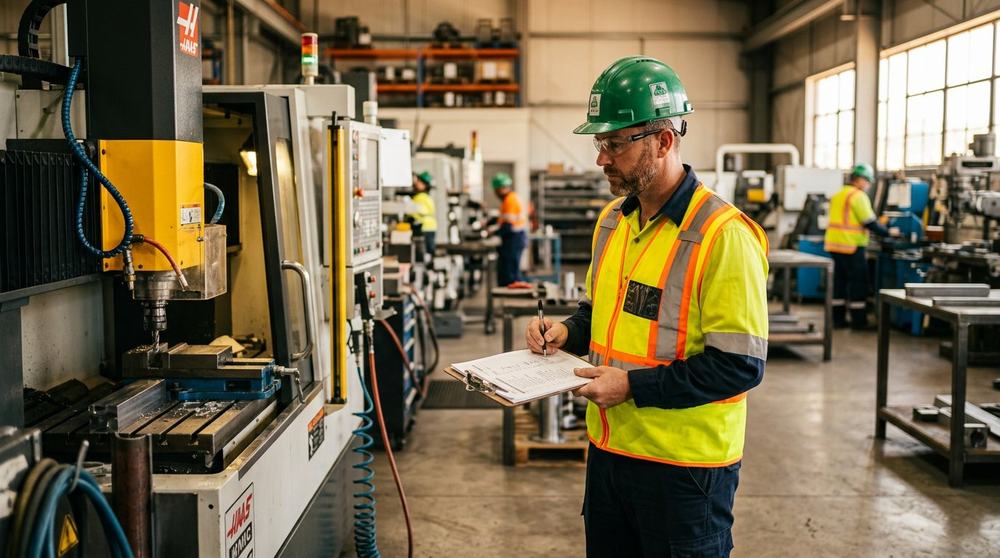
4 tools
The Inspections & Checklists range
Workplace Inspection Checklist
Free workplace safety inspection checklist: 30 items across fire, electrical, housekeeping, PPE, welfare and d
Inspections & ChecklistsElectrical Safety Inspection
Free electrical safety inspection tool: equipment and system checks, RCD and continuity testing, PAT record ta
Inspections & ChecklistsPPE Inspection Checklist
Free PPE inspection checklist: hard hats, gloves, boots, eye and respiratory protection, harnesses and high-vi
Inspections & ChecklistsOccupational Hygiene Checklist
Free occupational hygiene checklist: noise, dust, fumes, vapours, vibration and heat
Not sure which tool fits your job? Ask Muhammad Umer — one conversation maps the tool to the task.
Safety disclaimer
These tools are practical guidance, built to the UK baseline with the US equivalents named on each page. They do not replace a competent person assessment for high-risk work, a statutory assessment, or the advice of your insurer. Where a document has legal force — the fire risk assessment, the COSHH register, the permit to work — the responsible person owns it. Use the tool as the preparation, and the competent person as the sign-off.
Workplace Safety Inspection (UK): the Checklist That Holds
The workplace safety inspection runs on the checklist that is observable — the item is the thing you can see and verify, the answer is the yes or the no with the box for the detail, and the finding has the loop: the action, the owner, the date, the verification. The free workplace inspection checklist is on this page and in the Toolkit, and the frequency matches the risk — the daily for the live work, the weekly for the area, the monthly for the equipment the law names.