
OSHA (US) course
OSHA Silica
OSHA respirable crystalline silica safety training: the action level, exposure control methods, medical surveillance and the silica standards for construction and general industry.
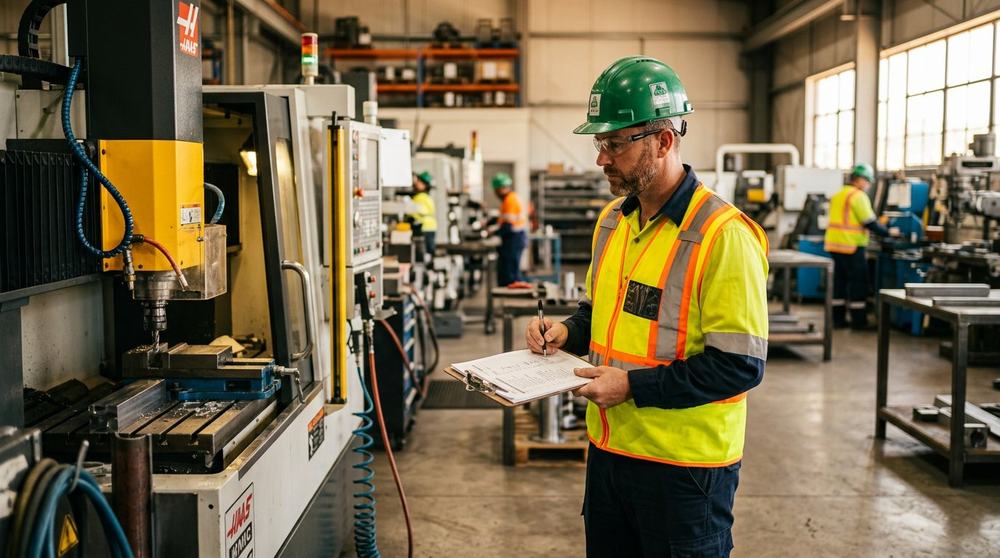
Who this course is for
- Construction workers exposed to cutting, grinding and drilling
- General industry workers in foundries, stone and manufacturing
- HSE staff who must implement the silica exposure control plan
- Anyone who has been near a silica near-miss or exposure event
The syllabus — what you’ll actually cover
| Module | What it covers |
|---|---|
| Silica and silicosis | What crystalline silica is; how exposure happens; silicosis and the long latency; the action level and permissible exposure limit This block carries the most exit-ticket weight — study it first and study it last. |
| The standards | OSHA 1926.1153 (construction) and 1910.1053 (general industry): exposure assessment, control hierarchy, medical surveillance The applied block: the standard looks straightforward until the exit ticket puts it in a site scenario. |
| Exposure control | Engineering controls first: wet methods, vacuum with HEPA, local exhaust; respiratory protection as the last line; housekeeping that does not re-disperse The practical core — the block that separates workers who do the work safely from workers who describe it. |
| Medical surveillance | Who is eligible; the baseline and periodic exams; recordkeeping of exposure measurements Keep this block fresh until exam day; it is where the straightforward marks are. |
| The exposure control plan | Writing and maintaining the plan; competent person; training records; air monitoring where required The closing block ties the course to the site — bring your own examples here and the exam stops being abstract. |
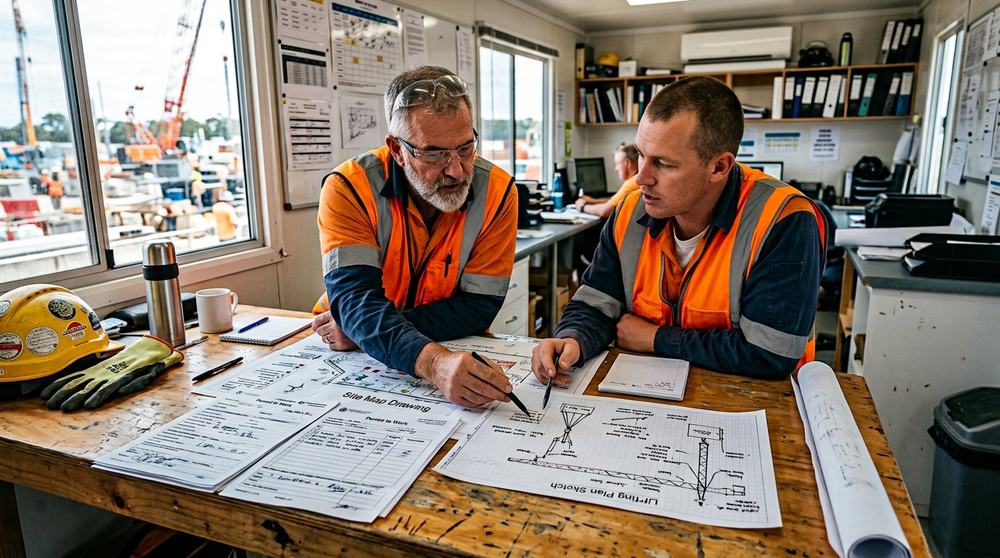
The exam & assessment
Knowledge assessment covering the standard, the control hierarchy and the exposure control plan. Completion certificate issued on passing.
Duration & delivery
A half-day to one-day course (3–4 hours) through the official programme.
How to prepare — the tips that actually work
- Learn the numbers: the action level and the PEL — they anchor the whole paper
- Practise the control hierarchy in order: engineering before respiratory, always
- Read a real exposure control plan before the course; the questions mirror its sections
- Know when medical surveillance applies — it is a guaranteed question
Where this takes your career
Silica is one of the most enforced respiratory hazards in US construction. This training is the formal record that your workforce understands the standard — a standard line on silica-heavy tenders and site safety plans.
What you’ll be able to do
- Work the standard on a real US workplace, not just recognise it on a slide
- Pass the exit ticket or knowledge assessment with the technique the course trains
- Hold the official OSHA card or completion certificate, recorded for your CV
- Meet the requirement your US site or tender lists for this topic
- Speak the OSHA standard numbers correctly with US supervisors and auditors
What the course actually looks like
The course is delivered through the official programme in the standard OSHA format for this topic — classroom or virtual, with the assessment at the end. You get the standard mapped section by section, the question style demonstrated, and the completion card or certificate arranged on passing. Schedules and fees are published on the official website — one message gets you the written quote.
How employers see this qualification
On a US site or a US tender, the OSHA card is the line that gets you through the gate. The 10 and 30 cards are the baseline; the topic-specific trainings — ladder, electrical, silica, HazCom, LOTO — are the lines that put you on the safety plan. US supervisors check the cards; the card that matches the task is the card that matters.
Common mistakes candidates make
- Studying the topic list but not the standard numbers — the OSHA questions cite the standard
- Practising only on paper when the assessment has a practical element
- Skipping the Focus Four connection; OSHA builds its questions around falls, electrocution, struck-by and caught-in
- Waiting until the last week — the timed exam rewards steady practice
How this fits with the other qualifications
On the OSHA route, OSHA Silica sits alongside the others like this:
- OSHA Respiratory Protection (OSHA (US)) — OSHA Respiratory Protection Training — 1910.134 & Fit Testing
- OSHA PPE (OSHA (US)) — OSHA PPE Training — 1910.132 Hazard Assessment & Selection
The official programme will map the right sequence for your goals — one conversation on WhatsApp saves months of guessing.
Before you enrol — confirm these five things
- The exact syllabus version the awarding body is running right now — and that it matches the batch you are booking
- The assessment format in writing: open-book or closed-book, the duration, the pass mark, and how many sittings per year
- The total fee in your currency, what it includes (materials, exam entry, certificate) and the refund position
- The delivery language and whether the classes are in person, virtual or self-paced with a live exam
- Your exam slot and the validity window, so the qualification lands when your role or tender actually needs it
Fees, dates & enrolment
Course information on this page is educational. Batch schedules, fees and enrolment run through the official programme — one conversation gets you a written quote, the exam slot and the study plan.
Common questions
OSHA Silica — answered
How long is OSHA silica safety training?
3–4 hours — a half-day to one-day course covering the standard, controls and the exposure control plan.
What is the silica action level?
The action level is 50 micrograms per cubic metre of air as an 8-hour time-weighted average. Above it, OSHA requires exposure assessment, a written exposure control plan and medical surveillance where applicable.
Who needs OSHA silica training?
Anyone exposed to respirable crystalline silica: construction workers doing cutting, grinding and drilling; general industry workers in foundries, stone and manufacturing; and the HSE staff who implement the control plan.
Is respiratory protection enough for silica?
No — OSHA requires the full control hierarchy, with engineering controls (wet methods, vacuum, local exhaust) first. Respiratory protection is the last line, not the primary control.
How do I book this course and what does it cost?
Batch schedules and fees depend on country, group size and delivery mode. Message the official programme on WhatsApp or through umer-hse.pro — you get a written quote with the exam slot and the study plan.
Keep building
Related courses
OSHA Respiratory Protection
OSHA Respiratory Protection Training
OSHA (US)OSHA PPE
OSHA PPE Training
THE HEALTH AND SAFETY is an education and knowledge network, not an awarding body. Qualifications are issued by the awarding organisations, and enrolment runs through the official programme.
Safety disclaimer
Course information is for guidance and planning. Syllabus, assessment and certification requirements are set by the awarding body and can change — always confirm the current requirements with the awarding body or the official programme before enrolment.